7 Real Programs That Pay for Dental Implants Right Now
Discover how federal programs, VA benefits, Medicare rules, and Marketplace plans offer funding or coverage for major dental procedures and implants.
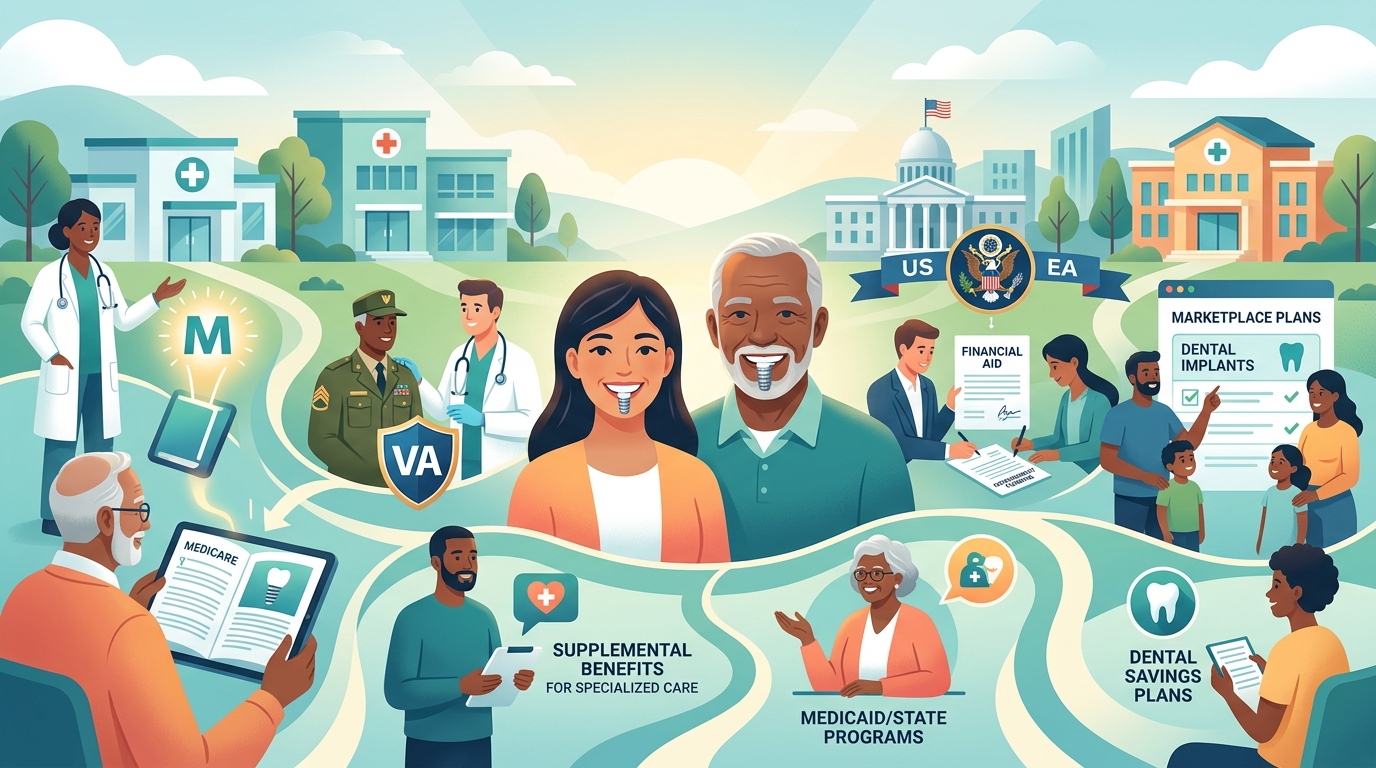
Dental implants cost thousands of dollars out of pocket under commercial fee schedules, leaving many patients searching for public assistance programs. Fortunately, several official programs, federal benefit structures, and managed health plans offer financial relief or direct coverage for complex oral surgery under specific qualification guidelines.
Navigating government dental benefits requires understanding strict eligibility tiers and pre-approval rules. Below are seven legitimate programs and legal mechanisms that help cover major dental work, along with the precise rules governing each option.
1. Department of Veterans Affairs Dental Benefits
The U.S. Department of Veterans Affairs (VA) provides comprehensive dental coverage that can include advanced reconstructive procedures, surgical extractions, and dental implants for qualifying veterans (Source 2). Unlike standard private insurance, VA dental care is not structured around annual maximum benefit caps for fully eligible individuals.
Eligibility for VA dental care is categorized into specific VA dental classes based on service-connected factors (Source 2). Veterans with a service-connected dental disability, former prisoners of war, and veterans with a 100 percent service-connected disability rating qualify for comprehensive dental care (Source 2). If a veteran's dental condition directly aggravates a service-connected medical condition, the VA may also approve clinical procedures required to restore functional chewing capability (Source 2).
2. Medicare Part A Hospital-Linked Dental Coverage
Original Medicare Part A covers specific dental services when they are directly tied to an inpatient hospital stay or major medical treatment (Source 1). While Part A excludes routine outpatient cleaning and basic extractions, it pays for complex oral examinations and jaw reconstruction performed during a covered hospital admission (Source 1).
For example, if a patient requires an oral evaluation or reconstructive jaw surgery prior to undergoing a major medical procedure—such as a kidney transplant or heart valve replacement—Medicare Part A covers the hospital-based dental services necessary to clear the patient for surgery (Source 1). The procedure must be clinically required to protect the patient's health during the primary inpatient medical treatment (Source 1).
3. Medicare Advantage (Part C) Supplemental Dental Plans
While Original Medicare limits routine dental care, many private Medicare Advantage (Part C) plans offer optional supplemental dental benefits that cover comprehensive care (Source 1). These private plans operate under CMS guidelines and frequently include coverage for extractions, root canals, crowns, and prosthetics (Source 1).
Certain Medicare Advantage plans include coverage for surgical implant placement or implant-supported dentures through network fee schedules (Source 1). Beneficiaries should examine the plan's Evidence of Coverage document to verify coinsurance percentages, which typically require the member to pay 20% to 50% of the cost up to an annual maximum benefit cap set by insurer fee schedules.
4. Health Insurance Marketplace Standalone Dental Plans
Under the Health Insurance Marketplace, individuals can purchase standalone dental plans or health insurance policies with embedded dental benefits during open enrollment or special enrollment windows (Source 3). Marketplace dental plans are grouped into two standard categories: High coverage levels and Low coverage levels (Source 3).
High coverage plans feature higher monthly premiums but lower copayments and deductibles for major procedures, whereas Low coverage plans feature lower premiums with higher out-of-pocket coinsurance (Source 3). Standalone High plans often provide coverage for major structural repairs and oral surgery after the member satisfies a standard waiting period outlined in insurer fee schedules.
| VA Dental Care | U.S. Department of Veterans Affairs | Comprehensive care for Class I-VI service-connected eligibility (Source 2) | Eligible Military Veterans |
|---|---|---|---|
| Medicare Part A | Centers for Medicare & Medicaid Services | Covers hospital-linked dental care needed for major surgeries (Source 1) | Seniors 65+ & Eligible Disabled |
| Medicare Advantage (Part C) | Private Insurance Carriers (CMS approved) | Offers optional supplemental comprehensive dental benefits (Source 1) | Medicare Advantage Enrollees |
| Marketplace Standalone Dental | Health Insurance Marketplace | High and Low coverage categories with major procedure coinsurance (Source 3) | Individuals and Families |
5. Essential Pediatric Dental Benefits Under the ACA
The Affordable Care Act designates pediatric dental care as an Essential Health Benefit for children aged 18 and under (Source 3). Insurers offering health plans on the Health Insurance Marketplace must offer pediatric dental coverage either embedded in the general plan or as a standalone option (Source 3).
For children requiring major reconstructive work due to congenital dental defects, severe trauma, or structural anomalies, ACA-compliant pediatric plans must adhere to strict out-of-pocket maximum limits (Source 3). Once a family reaches the annual out-of-pocket limit, the insurer pays 100% of covered medically necessary dental services for the remainder of the benefit year based on insurer fee schedules.
6. Dental School Clinical Teaching Programs and Grants
Dental school teaching clinics across the United States provide advanced restorative care, including surgical implant placement, at reduced out-of-pocket rates compared to private dental practices. Licensed prosthodontists and oral surgeons directly supervise postgraduate dental residents performing these clinical treatments.
Clinical teaching programs typically publish fee schedules that run 30% to 50% lower than regional commercial dental averages according to institutional fee data. Furthermore, select dental schools receive clinical research grants funded by public health institutes or medical manufacturers. These research grants fully or partially subsidize major dental reconstruction for participants who match specific clinical study criteria.
7. Federally Qualified Health Centers and Community Grants
Federally Qualified Health Centers (FQHCs) receive federal funding under Section 330 of the Public Health Service Act to deliver comprehensive primary healthcare and oral services to underserved populations. FQHCs charge fees on a sliding scale determined by household size and annual income relative to Federal Poverty Guidelines.
While rural health centers focus primarily on preventive care and diagnostic extractions, larger urban FQHCs frequently collaborate with university residency networks to provide complex surgical care. Patients seeking major oral rehabilitation can access sliding-scale rates for extractions, bone grafting, and prosthetic appliances at these safety-net institutions.
How to Maximize Dental Assistance and Avoid Unexpected Bills
To obtain coverage for complex oral surgery, patients should request a formal pre-treatment estimate from their dental provider before starting treatment. The clinical office submits diagnostic X-rays, periodontal charts, and procedural codes to the insurer or benefit administrator to confirm coverage limits, waiting periods, and exact patient cost-sharing amounts.
Additionally, check whether your state Medicaid program or private policy enforces annual benefit maximums. Coordinating care through approved network providers and submitting complete medical necessity documentation ensures you receive the maximum allowable assistance under your designated program.
Does Medicare cover dental implants under routine outpatient rules?
Original Medicare Part A and Part B do not pay for routine outpatient dental work or implants (Source 1). However, Medicare Part A covers hospital-based dental services required as part of a major inpatient procedure (Source 1). Some Medicare Advantage (Part C) plans offer optional supplemental benefits that help cover comprehensive care (Source 1).
How do veterans qualify for comprehensive VA dental care?
The Department of Veterans Affairs provides comprehensive dental benefits—which can include reconstructive surgery—to veterans who meet specific eligibility criteria, such as having a service-connected dental disability or a 100 percent service-connected disability rating (Source 2).
Are standalone Marketplace dental plans required to cover major dental work?
Health Insurance Marketplace standalone plans are divided into High and Low coverage levels (Source 3). Plans are not required to cover all adult major procedures, but High coverage plans generally provide higher coinsurance benefits for complex dental work after applicable waiting periods defined by insurer fee schedules (Source 3).
Sources
- Medicare Dental Services Coverage — Centers for Medicare & Medicaid Services
- VA Dental Care Benefits — U.S. Department of Veterans Affairs
- Dental Coverage in the Health Insurance Marketplace — Health Insurance Marketplace
This article is for general information only and is not professional advice. Figures come from public sources and change over time; check the official source before you act.
More from Quick Money Net
- 5 Device Trade In Mistakes Stopping You From Getting Free iPhones
- See The $65 Monthly Fees Hiding In Free iPhone Carrier Deals
- Medicare Part B Late Enrollment Penalty: Calculation Formula and Appeal Eligibility
- See the $1,500 Dental Implant Allowance Most Insurers Hide
- How to Find Dental Schools Offering Free Implants Near You
- 7 Real Programs That Pay for Dental Implants Right Now