How to Find Dental Schools Offering Free Implants Near You
Learn how to locate accredited dental school clinics, clinical trials, and community health centers offering low-cost or free dental implant procedures.
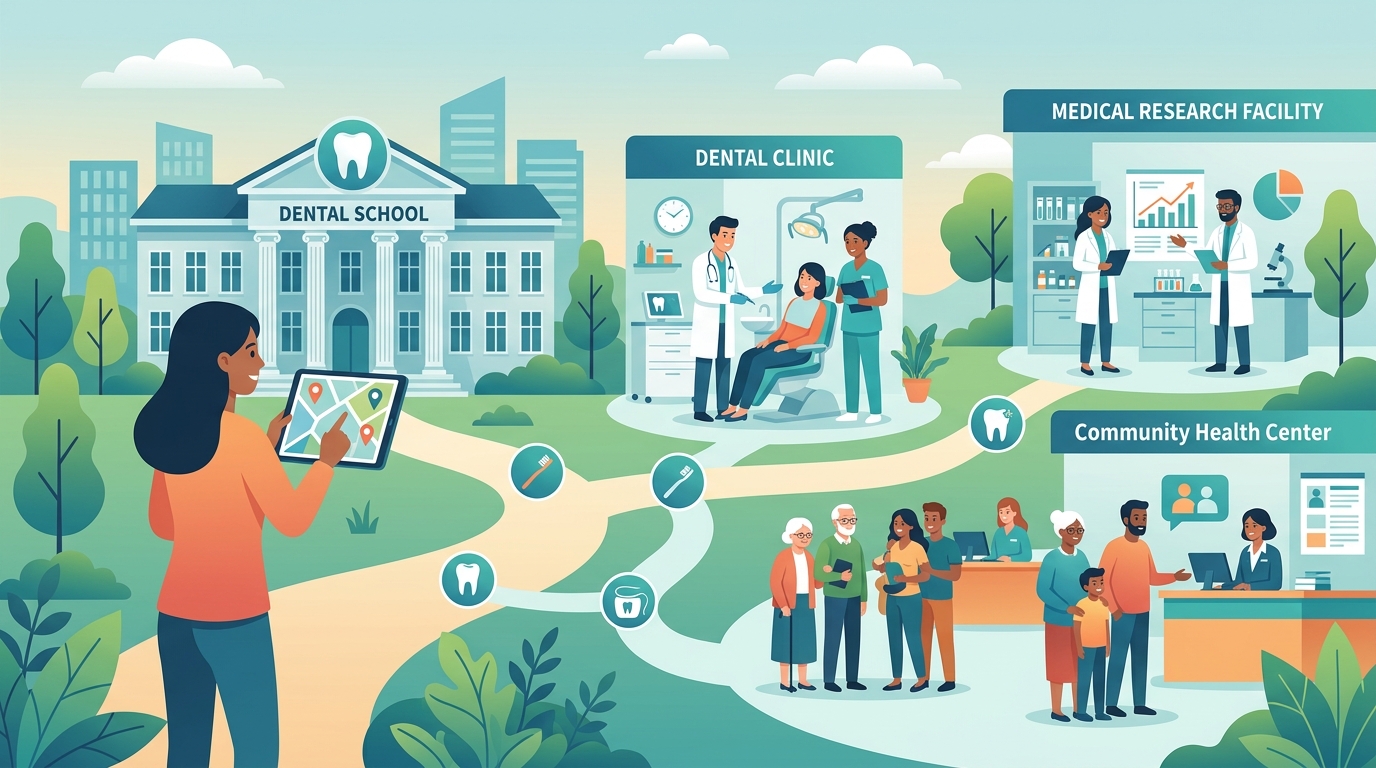
Dental implant procedures can cost thousands out of pocket, but accredited training clinics and research programs offer deep discounts or zero-cost options. By following a clear search process, you can locate supervised dental programs and clinical trials in your region.
Why Dental Schools Offer Low-Cost or Free Implant Care
Dental schools rely on public patient clinics to train future dentists and specialized dental residents. According to the National Institute of Dental and Craniofacial Research (NIDCR), dental school clinics offer quality care at a significantly lower cost than private practices (Source 1). In these clinics, dental students provide treatment under the direct supervision of experienced, licensed dentists (Source 1).
Because these facilities focus on education rather than profit, fees are priced to cover standard operating supplies. For complex procedures like dental implants, care is often delivered in post-graduate or resident clinics (Source 1). These specialized departments train licensed dentists who are completing advanced fellowships in prosthodontics, periodontics, or oral surgery. In some cases, specific clinical trials sponsored by research institutions or federal health programs cover the full cost of implant care for qualified patients (Source 1).
Step 1 — Search the CODA Database for Accredited Programs
The most reliable way to locate official dental education clinics is through the Commission on Dental Accreditation (CODA) (Source 2). CODA maintains a public directory of all accredited dental schools and advanced dental specialty programs in the United States (Source 2).
When searching the directory, look beyond basic pre-doctoral dental programs. Filter your search for advanced specialty programs, specifically:
- Prosthodontics programs (specialists in tooth restoration and implants)
- Periodontics programs (specialists in gum health and implant placement)
- Oral and Maxillofacial Surgery programs (specialists in surgical implant placement)
These post-graduate clinics handle advanced surgical cases, including bone grafts and full-implant placement (Source 1, Source 2). Contacting these departments directly often yields shorter waiting lists for implant consultations compared to general student clinics.
Step 2 — Check for Active NIDCR Clinical Trials
If you require low-cost or free dental implant procedures, federal research programs provide another potential pathway. The National Institute of Dental and Craniofacial Research (NIDCR) conducts and sponsors clinical studies on oral health treatments, surgical techniques, and materials (Source 1).
Patients who meet exact clinical eligibility criteria for an active study may receive free dental evaluations, implant hardware, and surgical care (Source 1). These studies take place at clinical research centers and affiliated university dental schools across the nation. To participate, candidates must complete a preliminary screening to confirm their medical and dental history matches the research protocol (Source 1).
Step 3 — Explore HRSA-Funded Community Health Centers
For individuals who need overall oral health care alongside restorative options, federally funded health centers provide sliding-scale services. The Health Resources and Services Administration (HRSA) operates a national network of community health centers that supply comprehensive health and dental care (Source 3).
While not all community health centers perform complex implant surgery, many partner with local university programs or offer referrals to specialty clinics. Fees at HRSA-funded health centers are determined on a sliding fee scale linked to your household income and family size (Source 3). This structure ensures that individuals without private dental insurance can access required diagnostic X-rays, extractions, and preparatory care at reduced rates (Source 3).
Comparing Dental Care Options and Cost Structures
Different types of clinics offer distinct advantages, fee structures, and supervision levels. The table below outlines key features across provider categories:
| Clinic Type | Care Provider | Fee Structure | Source |
|---|---|---|---|
| Pre-Doctoral Dental School | Dental Students (Supervised) | Reduced flat fees | NIDCR (Source 1) |
| Post-Graduate Specialty Clinic | Resident Dentists / Specialists | Discounted specialty rates | NIDCR (Source 1), CODA (Source 2) |
| NIDCR Research Clinical Trial | Research Dentists & Faculty | Free or covered by trial | NIDCR (Source 1) |
| HRSA Community Health Center | Licensed Dentists & Staff | Income-based sliding scale | HRSA (Source 3) |
What to Expect During the Dental School Screening Process
Before receiving implant treatment at a dental school, prospective patients must complete an initial evaluation. Dental schools cannot accept every applicant because student training requires a specific variety of clinical cases (Source 1).
During your initial screening visit, the clinic team will complete several steps:
- Comprehensive oral exam and medical history review
- Digital X-rays or 3D cone-beam computed tomography (CBCT) scans
- Evaluation of jawbone density and gum stability
- Assessment of overall suitability for long-term implant success
If accepted into the program, your care plan will be managed by a team of supervising faculty members and dental residents. Appointment times at teaching clinics are typically longer than standard private practice visits, as faculty members inspect and sign off on every stage of treatment (Source 1).
How to Apply to Local Dental Teaching Programs
To start the application process, follow these concrete steps:
- Access the CODA accredited program directory to find dental schools in your state (Source 2).
- Visit the clinic website for the dental school or call their patient intake center.
- Request an appointment specifically for the Post-Graduate Periodontics or Prosthodontics clinic.
- Ask whether the school participates in active NIDCR research studies or clinical trials for implant restoration (Source 1).
- If dental school locations are too far, use the HRSA health center locator to find nearby low-cost primary dental options (Source 3).
Are dental school implants safe?
Yes. Care in dental school clinics is delivered by dental students or resident specialists under the direct supervision of licensed, experienced faculty dentists (Source 1).
How much can you save at a dental school clinic?
Fees at dental school clinics are significantly lower than private practice rates because the primary mission is education (Source 1). Exact costs depend on the specific program, clinic type, and individual care plan (Source 1).
How do I find out if a dental program is fully accredited?
You can verify accreditation status by searching the official Commission on Dental Accreditation (CODA) directory online (Source 2).
Sources
- Finding Low-Cost Dental Care — National Institute of Dental and Craniofacial Research
- Find an Accredited Dental Education Program — Commission on Dental Accreditation
- Find a Health Center — Health Resources and Services Administration
This article is for general information only and is not professional advice. Figures come from public sources and change over time; check the official source before you act.
More from Quick Money Net
- 5 Device Trade In Mistakes Stopping You From Getting Free iPhones
- See The $65 Monthly Fees Hiding In Free iPhone Carrier Deals
- Medicare Part B Late Enrollment Penalty: Calculation Formula and Appeal Eligibility
- See the $1,500 Dental Implant Allowance Most Insurers Hide
- How to Find Dental Schools Offering Free Implants Near You
- 7 Real Programs That Pay for Dental Implants Right Now